
Early Music on the Road
Early music has always had a special relationship with the road—it's a tradition carried forward by wandering minstrels and itinerant musicians for centuries.
During my 29 years with Anonymous 4, touring was how we shared the intimacy and vitality of historical performance with audiences around the globe.
But as any performing artist will tell you, taking early music on the road today requires immense creativity, grit, and a willingness to rethink old models. In a recent EMAg feature by Kyle MacMillan, 'On the Road Again,' I had the pleasure of sharing a few reflections on what touring looked like in our era, alongside insights into how today’s ensembles are keeping the field vibrant.
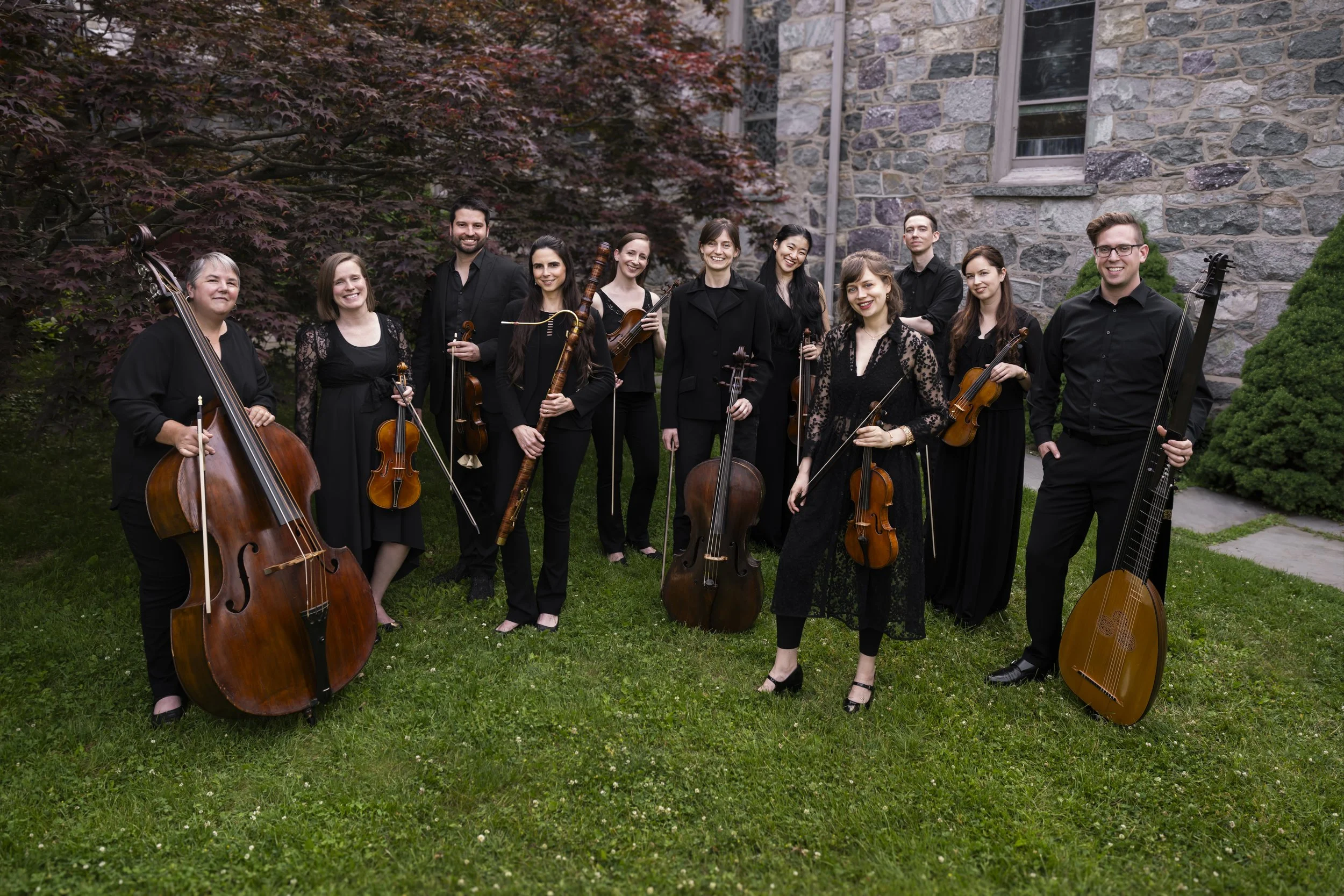
One group leading that charge is the period-instrument ensemble Relic, who built their entire mission around touring historically informed programs to all 50 states. I’m especially thrilled that local audiences will get to experience their dynamic energy live when they join forces with Music Before 1800 on October 4!
Check out the article to learn more about how our early music community brings centuries-old music to life across the country.
Susan Hellauer, Music Before 1800 Board of Directors
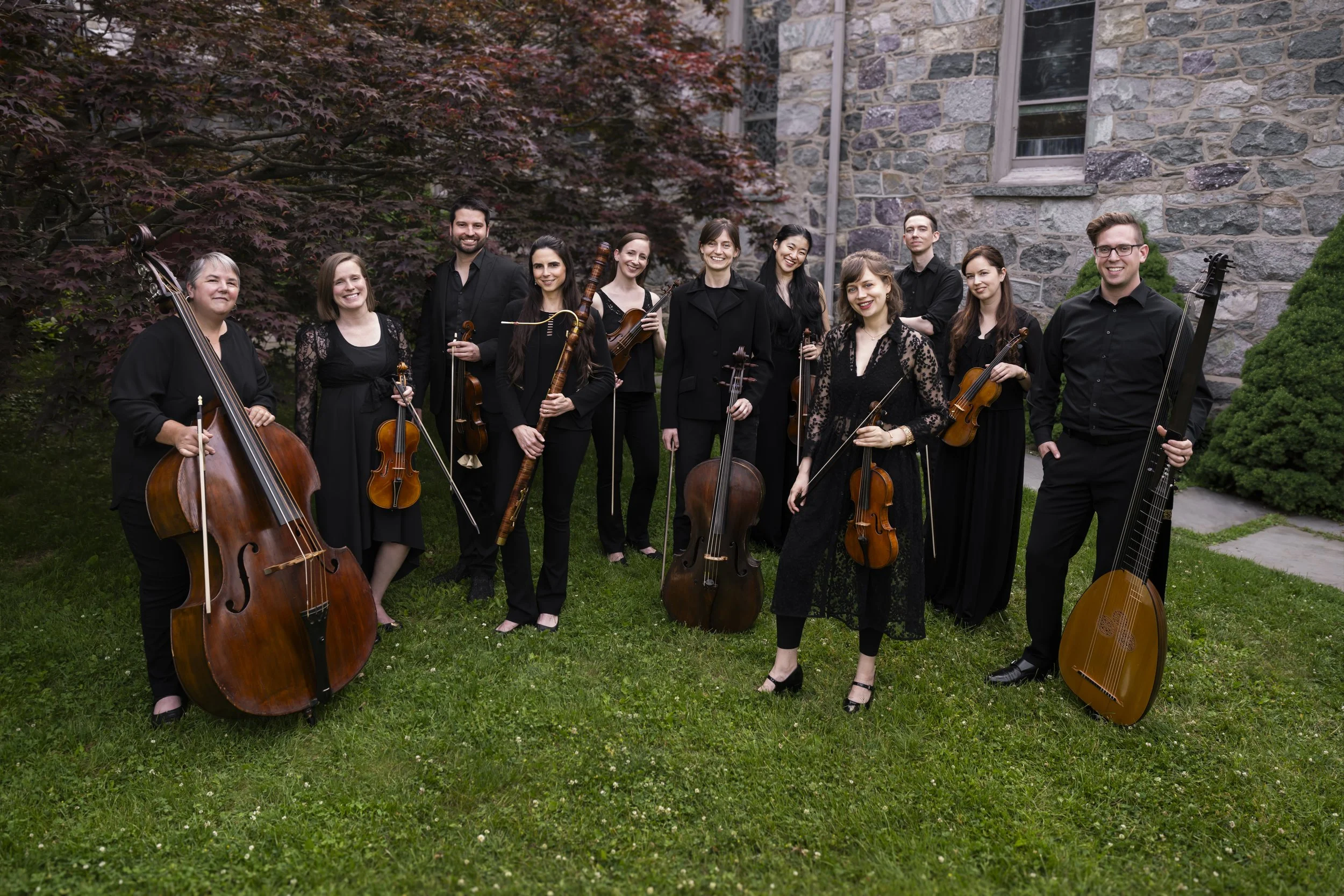
Relic © Chris Lee
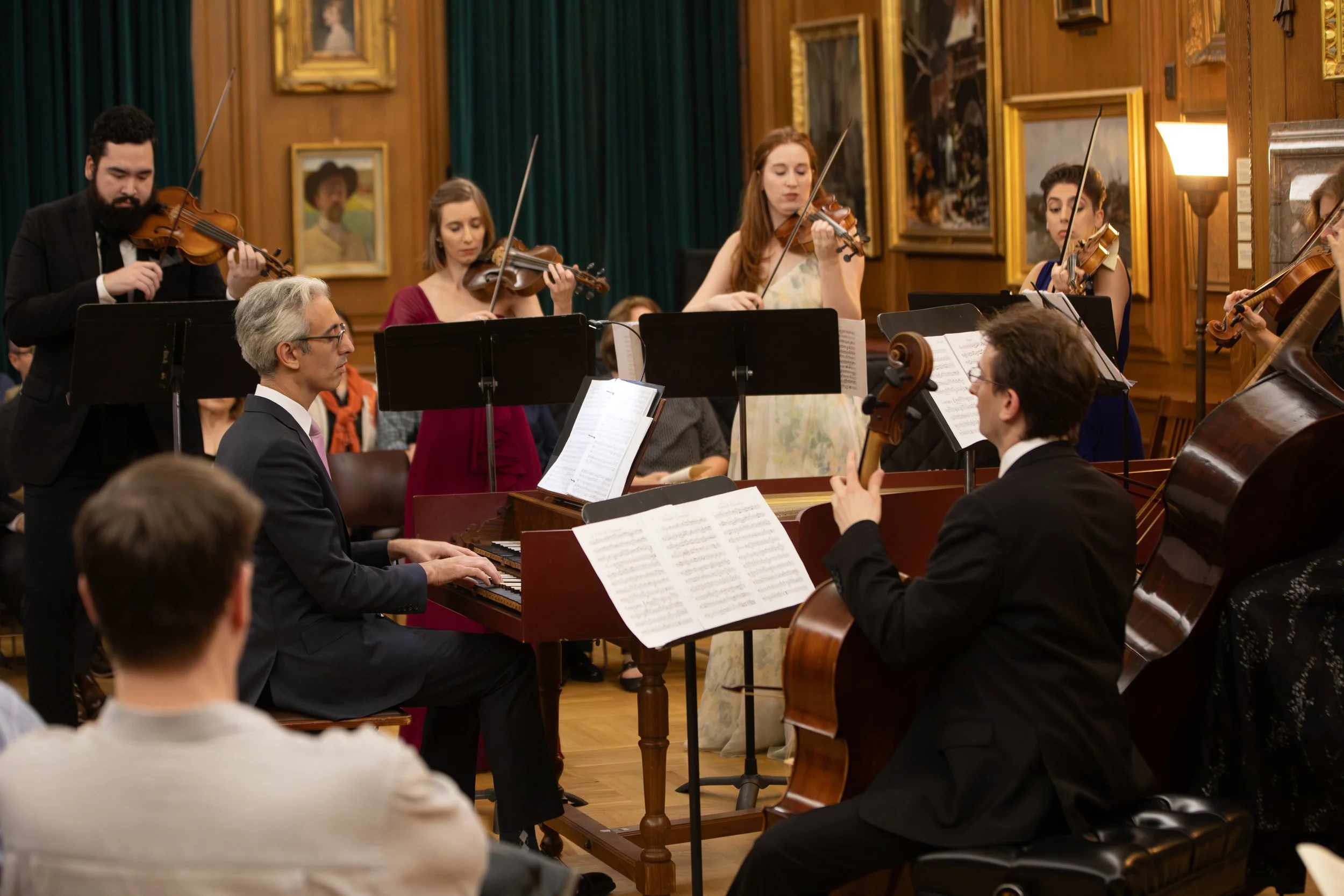
Helicon Ensemble Presents: Children of Orpheus & The Music of Arcangelo Corelli
By Nancy Hager
On Sunday, November 8, the Helicon Ensemble will present a concert entitled “Children of Orpheus.” Not the Orpheus of Greek mythology, the hero in operas by Monteverdi (1607) and Gluck (1762), who used his powers as a poet and musician to secure entry into the underworld. Helicon’s Orpheus is Arcangelo Corelli (1653- 1713), called “the new Orpheus of our time” in a 1689 treatise by the theorist Angelo Bermardo. Helicon’s program will explore what inspired the admiration of Bernardo and so many others, securing Corelli’s fame during his lifetime and his continued influence after his death.
Corelli was born in a small town in Romagna, moving in 1666 to Bologna where there was a flourishing school of violinists. Advances in violin making by Stradivari, Amati, and Guarneri during the 16th century spurred exploration of the instrument’s capacity and contributed to the violin’s ascendancy during the Baroque period. At age 17 Corelli was reportedly accepted into Bologna’s prestigious Accademia Filarmonica. By the mid 1670s he was in Rome where he quickly established himself as a member of various ensembles sponsored by such wealthy patrons, as Christina, the former Swedish Queen, Cardinal Pamphili, and Cardinal Pietro Ottoboni, nephew of Pope Alexander VIII. Corelli actually lived at Ottoboni’s palace where visiting dignitaries and musicians attended Monday evening concerts that featured works composed and performed by Corelli.
Although much admired as a performer, Corelli did not play a major role in the development of violin technique. The English music historian, Charles Burney, reported that Corelli was unable to execute his part in an overture by Handel because, as Corelli protested, he did not understand the French idiom. There are other accounts to the effect that he had difficulty executing passages in a high register. His fame as a violinist likely rested on his performances of his own works where the lyricism and expressiveness of his melodic material suggest a more cantabile style of playing than the virtuosity required in works of other baroque composers.
At a time when his contemporaries typically churned out a steady stream of operas, church music, orchestral and chamber music, Corelli’s known output is modest - just 72 sonatas and concertos, all designated for strings and continuo. (the exception, one posthumous sonata for two trumpets). Although small in number, they became known through collections published between 1681 and 1714 - four sets of 12 trio sonatas each, one set of 12 violin sonatas, and one set of 12 concerti grossi. All were widely circulated and reprinted in various arrangements and transcriptions, more than any other composer of his day.
Corell’s influence was also spread through his teaching, Francesco Gasparini and probably Francesco Geminiami being among his students. The German organist and composer Georg Muffat sought him out on a visit to Rome. He states in the preface to his own concerti grossi of 1701 that “having noticed the great variety which this style admits of, I began to compose some of these concerti , which I tried out with the aforesaid Arcangelo Corelli, to whom I am much indebted for many useful observations in respect of his collections….” Corelli was especially admired by the English. Roger North noted in the memoirs of his music travels that “most of the nobility and gentry that have travelled in Italy affected to learn of Corelli.” Handel who met Corelli when he was in Rome in the early 1700s reported that “his two dominant characteristics were his admiration of pictures which they say he never paid for, and an extreme parsimony. His wardrobe was not extensive. Ordinarily he went about clothed in black, and he used to wear a dark cloak; he was always on foot, and protested vigorously if one tried to make him take a carriage.”
Corelli’s four collections of trio sonatas constitute a major contribution to this most important genre of middle baroque chamber music. The term trio refers to the texture of three melodic lines, two in the same range (violins in Corelli’s case) and a third bass line performed by a continuo of cello and harpsichord (or other instrument capable of improvising a harmonic support).
The concerto, which was just emerging as a major instrumental genre, requires a small and a large instrumental ensemble. In Corelli’s day the “ripieno” or full group usually consisted of 12 to 16 string players and continuo, the “concertino” of one or more soloists, for Corelli the same instrumentation as his trio sonatas. In the generation after Corelli, the concerto grosso with its small group of soloists was largely eclipsed by the solo concerto, where a single instrument with its greater capacity for virtuoso display is pitted against the larger mass of the orchestra.
Some of Corelli’s sonatas and concertos are “da chiesa”, (of the church), performed during the celebration of the canonical hours and comprised of movements of diverse time signatures and tempos. The movements of the sonatas and concertos “da camera,” (of the chamber), are modeled on allemandes, correntes, gigues and other dance types considered inappropriate for church use.
On the whole Corelli’s style is considered conservative, achieving contrast through subtle dynamic shadings and, in the concertos, an occasionally more agile style of writing for the soloists. The potential for collaboration, competition, and dialogue between solo and tutti forces made the concerto an ideal vehicle for achieving the vivid expression and dramatic gestures characteristic of the Baroque aesthetic, as evident in the later concertos of Vivaldi, Bach, Handel, Torelli, Locatelli, and so many others.
The judgment of Corelli’s contemporaries and followers -the “Children of Orpheus” - was eloquently summed up by the English composer and historian Charles Burney: “The Concertos of Corelli seem to have withstood all the attacks of time and fashion with more firmness than any of his other works. The Harmony is so pure, so rich and so grateful; the parts are so clearly and judiciously disposed; and the effect of the whole …so majestic, solemn, and sublime that they preclude criticism and make us forget that there is any other music of the same kind existing.”
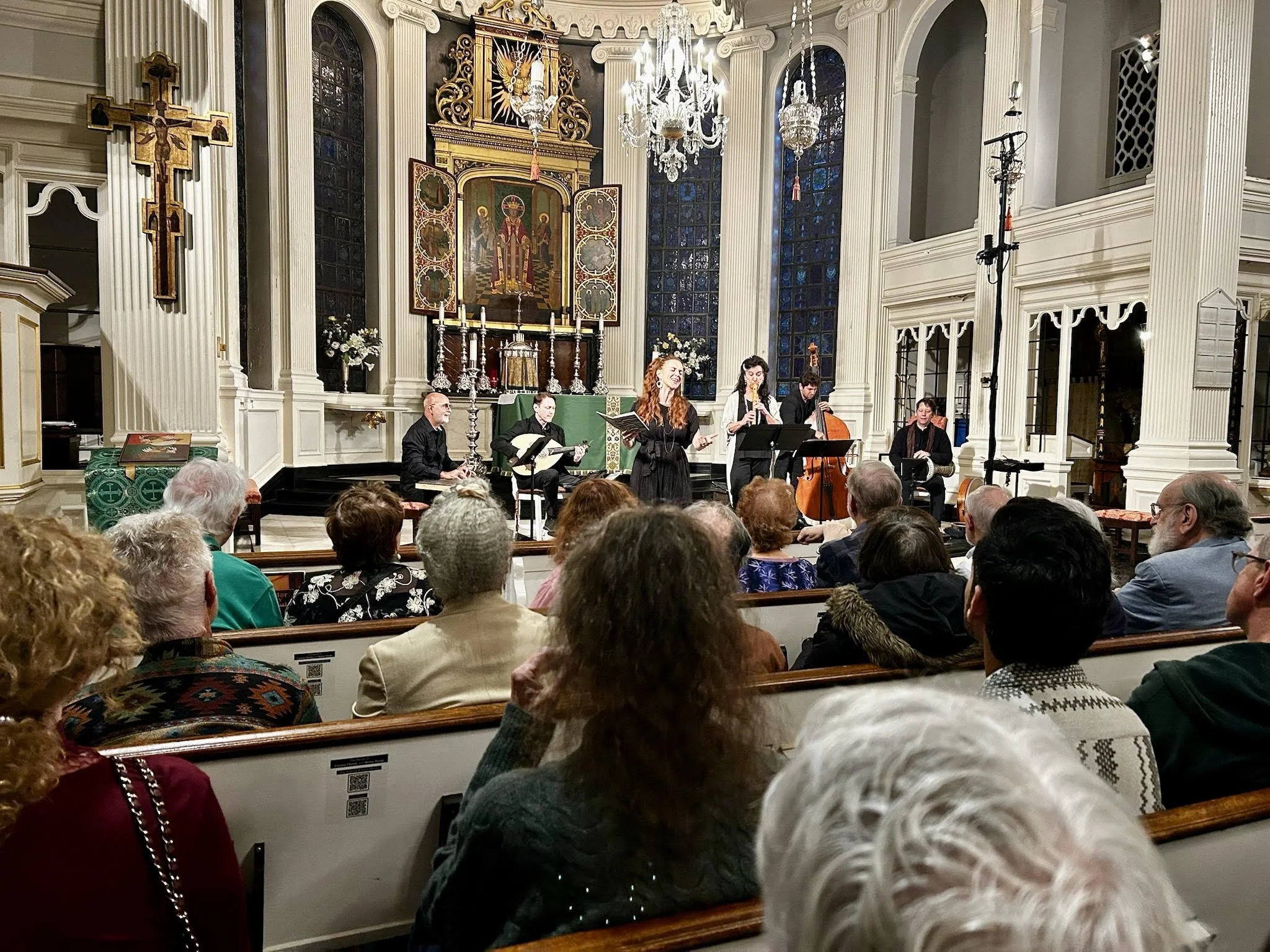
What Is Early Music? A Guide to Medieval, Renaissance, and Baroque Performance
What is Early Music?
Early music is one of the most fascinating and immersive corners of the classical music world—but for many listeners, the term itself can feel unfamiliar. So what is early music, and why is it such an essential part of today’s musical life in New York City?
At Music Before 1800, the city’s longest-running early music concert series, audiences experience this repertoire as a living tradition—performed with historical insight, technical mastery, and expressive depth. (Music Before 1800)
What Does “Early Music” Mean?
In its most familiar usage, early music refers to European repertories spanning the Medieval, Renaissance, and Baroque periods. Yet this definition, while useful, is necessarily incomplete. Music before 1800 was never confined to a single tradition: it unfolded across interconnected global cultures, shaped by trade, migration, religious exchange, and empire.
At Music Before 1800, this broader perspective informs our programming: alongside canonical European works, early music includes repertoires from the Ottoman court, the Iberian world and its transatlantic networks, and diverse vocal and instrumental traditions that coexisted with, and influenced, what we now call Western classical music.
Historically informed performance provides a framework for engaging this repertoire. Rather than treating early music as a fixed artifact, historically informed performance reconstructs sound worlds through period instruments, historical tunings, and close study of primary sources.
Medieval Music: The Origins of Western Tradition
Medieval music (c. 500–1400) preserves some of the earliest notated traditions in Europe, but it also reflects a much wider sonic environment shaped by oral transmission and intercultural contact.
Gregorian chant, with its fluid phrasing and modal clarity, forms one cornerstone of the repertory. Equally significant is the emergence of polyphony, or independent vocal lines that interact. This innovation would go on to shape centuries of musical thought.
At the same time, medieval Europe was in dialogue with neighboring cultures. Encounters with the Islamic world, particularly in regions such as Al-Andalus, contributed to shared instruments, melodic practices, and theoretical ideas that resonate across traditions.
Renaissance Music: The Rise of Polyphony
The Renaissance (c. 1400–1600) is often defined by its refinement of polyphony into balanced, interweaving lines that prioritize both structural clarity and textual expression. Sacred music and secular genres such as the madrigal also flourish, demonstrating a heightened sensitivity to language and rhetoric. Key attributes include:
Balance between voices
Text expression
Vocal clarity
Music of this time is equally marked by expansion beyond Europe. The circulation of musicians and manuscripts, alongside colonial and mercantile networks, brought European musical practices into contact with the Americas, Africa, and Asia. In the Iberian world, for example, liturgical and vernacular traditions intersected in ways that produced hybrid repertoires still being rediscovered today.
For modern performers, Renaissance music offers not only intellectual complexity but an extraordinary range of color, shaped by vocal timbre, tuning systems, and improvisatory practice.
Baroque Music: Drama and Virtuosity
The Baroque era (c. 1600–1750) marks a shift toward heightened contrast, ornamentation, and instrumental virtuosity. New forms—cantatas, sonatas, operas, and concertos—expand the expressive possibilities of music, while composers develop increasingly sophisticated approaches to harmony and rhythm.
Figures such as Johann Sebastian Bach and Claudio Monteverdi are central to this story, but the Baroque was also a period of intense cultural exchange. Ottoman military bands influenced European orchestral color; dance rhythms circulated across continents; and composers absorbed stylistic elements from beyond their immediate surroundings.
Understanding this repertoire on instruments such as the lute, viol, and harpsichord reveals a sonic palette that differs fundamentally from modern orchestral sound, emphasizing transparency, articulation, and rhetorical nuance.
What Is Historically Informed Performance?
A defining feature of early music today is historically informed performance. This approach seeks to recreate how music would have sounded at the time of its creation.
At Music Before 1800, performers use instruments such as:
Lutes
Viols
Harpsichords
These instruments, combined with historically grounded techniques, produce a sound world that is distinct from modern orchestral performance. For experienced listeners, historically informed performance offers a way to hear familiar works anew: tempos shift, textures clarify, and ornamentation becomes integral rather than decorative. Just as importantly, historically informed performance continues to expand its scope, incorporating non-European traditions and questioning long-held assumptions about style and interpretation.
Where to Hear Early Music in New York City
New York City’s musical landscape is vast, but early music occupies a distinctive place within it, valued for its intimacy, immediacy, and depth of scholarship.
For more than five decades, Music Before 1800 has presented internationally acclaimed artists in programs that combine historical insight with adventurous programming. In the resonant acoustic of Corpus Christi Church, these performances invite listeners into close engagement with repertoire that spans centuries and continents.
Experience Early Music Live
Early music is not simply a window into the past. It is a continually unfolding practice of rediscovery. Whether through the meditative line of chant, the intricate architecture of Renaissance polyphony, or the dramatic intensity of the Baroque, each performance offers a fresh perspective on how music communicates across time.
Explore our upcoming concerts and experience early music as it lives today.
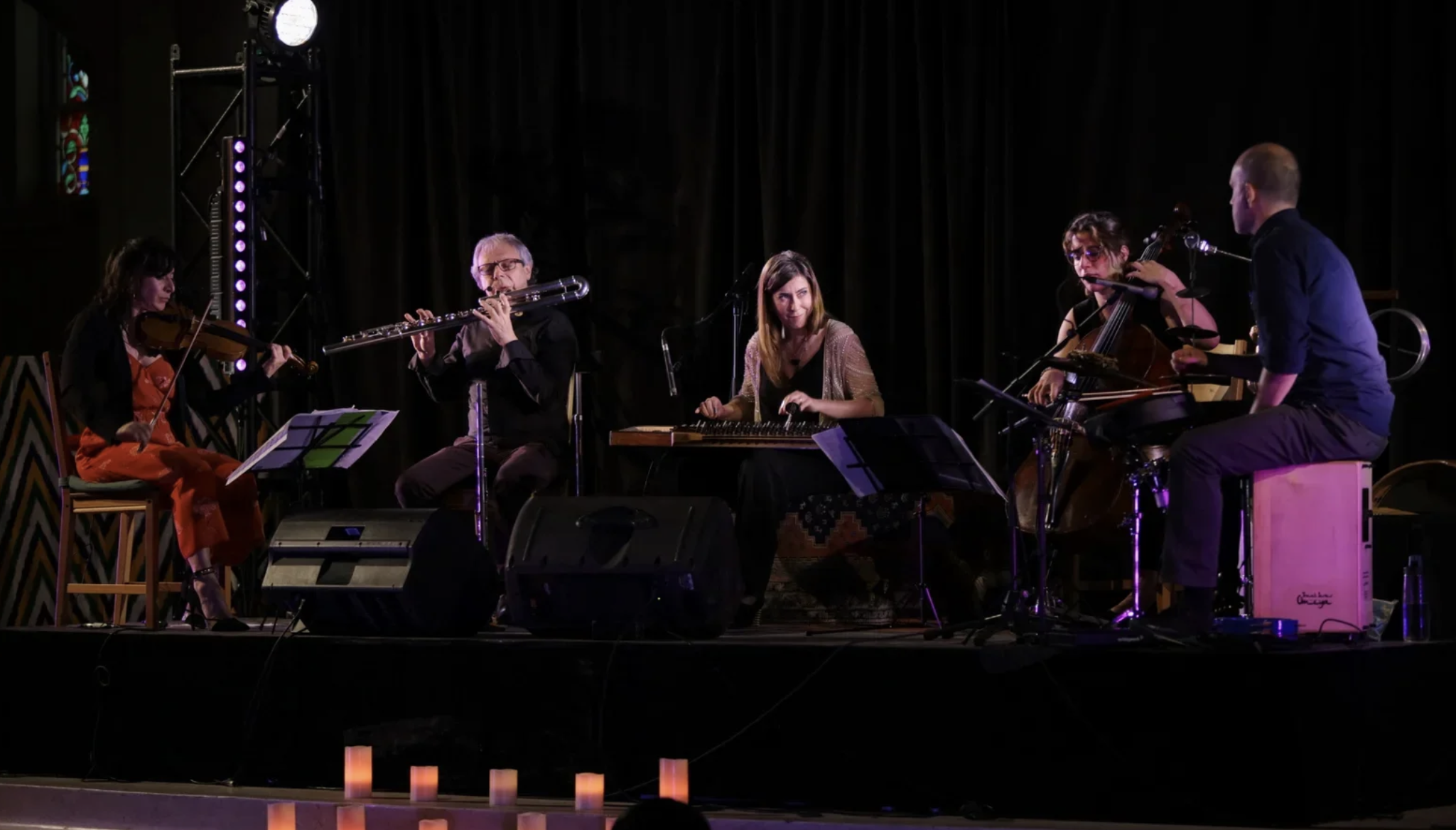
Levantine Rhapsody: Sound Worlds in Dialogue
Levantine Rhapsody: Centered on the artistry of Turkish kanun virtuoso Didem Basar, this concert traces a musical language formed between traditions spanning Ottoman, European, and beyond.
Levantine Rhapsody, presented by Music Before 1800 in collaboration with the World Music Institute on Sunday, May 31 at Corpus Christi Church, will be a program shaped by exchange, memory, and the persistent movement of sound across borders. Centered on the artistry of Turkish kanun virtuoso Didem Basar, this concert traces a musical language formed between traditions spanning Ottoman, European, and beyond.
Timed to coincide with the festival of Eid al-Adha, the program situates itself within a living cultural moment, while drawing on practices that long predate modern categories of genre or geography.
A Continuum of Traditions
At the heart of the program is a dialogue between systems of sound.
Basar’s work moves fluidly between Turkish maqam, or modal frameworks that shape melodic development, and Western compositional structures. The result is not juxtaposition, but impressionistic integration.
Improvisation plays a central role. Rather than ornamenting a fixed text, improv guides the listener through shifting tonal centers. For audiences familiar with early music’s reliance on unwritten practice, this approach will feel familiar.
Turkish Music and the Artistry of Didem Basar
Rooted in the classical traditions of Turkish music, Didem Basar’s work draws on the makam system—a nuanced framework of melodic development that shapes both composition and improvisation. For listeners attuned to early music, makam offers a compelling parallel to pre-tonal modal practices in Europe, while opening onto a distinct expressive vocabulary defined by microtonal inflection, rhythmic cycles (usul), and ornamentation as structure rather than embellishment.
A leading kanun performer, composer, and educator, Basar has been widely recognized for her work bridging Turkish and Western musical traditions. She is a founding member of the ensemble Constantinople and serves on the faculty at the University of Toronto, where she directs the Middle Eastern Music Ensemble.
The Kanun and Its Sound World
The kanun, a plucked zither central to Ottoman and Middle Eastern traditions, anchors the ensemble’s sound. With its microtonal flexibility and percussive clarity, it allows for a rare level of nuance in pitch and articulation.
An Ensemble of Familiar Voices
Joining Basar is a quartet of artists well known to MB1800 audiences through the celebrated Constantinople programs: flutist Guy Pelletier, cellist Dominique Beauséjour-Ostiguy, and percussionist Patrick Graham.
Early Music, Reframed
Levantine Rhapsody sits squarely within MB1800’s broader curatorial vision: to present early music not as a closed canon, but as a network of practices shaped by exchange.
Long before 1800, musical cultures across the Mediterranean and beyond were in sustained contact—through trade, diplomacy, migration, and empire. Modal systems, instruments, and repertories traveled alongside people, leaving traces that are still audible.
Hearing Across Time
“Continuum is the cry of all those who have died and been forgotten,” Basar writes—a line that resonates beyond the program itself.
Join Music Before 1800 on Sunday, May 31 at Corpus Christi Church. Reserve tickets.